Showing posts with label training. Show all posts

Friday, March 11, 2016

Trip Report Frankfurt: Festung Königstein, Heildelberg, Wiesbaden, Mainz

Back in November 2014, I attended a three week training course in Frankfurt, Germany. Fortunately, I was able to bring my family AND we have friends and family who live nearby. So, after class during the week (but mostly just on the weekends) we were able to see quite a bit of the surrounding area! Below are the (slightly) commented pictures from our extra-curricular sightseeing.


Burg Rheinstein
The Rhein


Römerberg Plaza, Frankfurt
Main River
Eiserner Steg, known for locks carved with lovers' initials

Frankfurt Am Main (indeed).
Römerberg Plaza, Frankfurt
Rural Germany, from Festung Königstein
Sunset from the Festung Königstein. I highly recommend visiting this place!

Festung Königstein
Heidelberg
Heidelberg
Heidelberg
Wiesbaden
Wiesbaden
Frankfurt Museum of Natural History
Saalburg (recreated Roman) Castle


Mainz
Mainz
Frankfurt
Frankfurt
Frankfurt
YOU ARE 300 MILES FROM THE OCEAN....
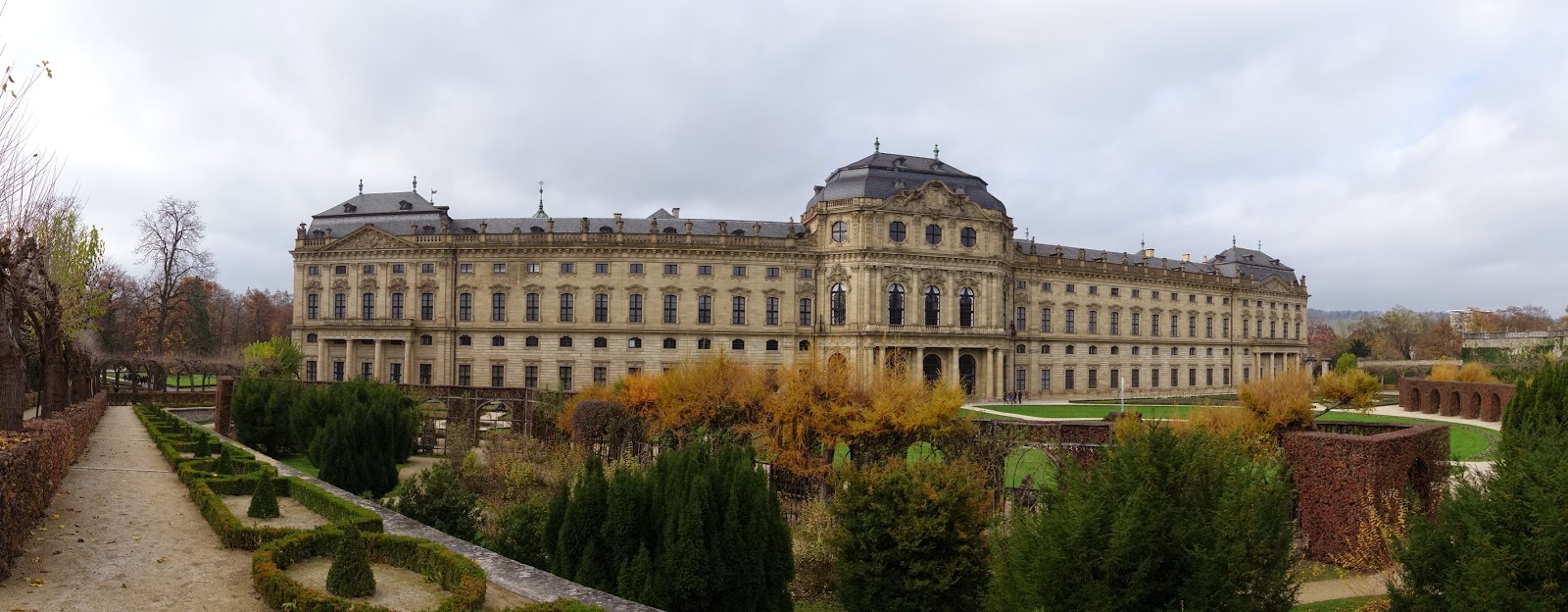
Würzburg Residence
Festung Marienburg
Festung Marienburg

Festung Marienburg
View from Festung Marienburg

Wednesday, July 8, 2015

Job Perks

Generally when you talk about "job perks," you're referring to monetizable benefits. Joining the Foreign Service is pretty much the opposite. This job is all about the "experience" fringe benefits. I'm not even talking about the swanky parties, getting to live overseas, or (possibly meeting) visiting VIPs.

Closer to 'work,' we have frequent drills and micro training sessions. Some are pretty normal (fire drill), but others can be quite novel! For example... I can count the number of times I put on a hazmat helmet or extinguished a fire at my previous jobs (any of them!) on zero hands. Besides, I (finally) have a job where I occasionally get to hit computers with giant hammers! Let's face it, that's the biggest job perk of them all.


Friday, June 6, 2014

Graduation Day


Graduation day! I would never add music to any webpage, but you can try to imagine a Pomp and Circumstance March in the background while you read this. 14:00 found us sitting in the Wood Lobby at FSI. After a couple of speeches, one by Tin Cao (Assistant Dean of the School of Applied Information Technology (SAIT)) and one by Steven Taylor (CIO for the State Department), we were called out one by one and received our certificates. It was very reminiscent of college graduation, except with way fewer people. Our certificate included a copy of the class picture we took during IRM Tradecraft and the certificate posted above. It was a short, but pleasant, ceremony followed by another group photo, general congratulations and mixing with our instructors.

Every IMS class has one student that is voted for by the instructors and other students to be the "distinguished honor graduate," and I was surprised and incredibly flattered to be chosen for my class. Fortunately, I had spent no time preparing myself for such an honor, so I was woefully unprepared when my classmates called for a speech. I'm not much of an orator, but I would like to repeat part of what I said in my (very brief) impromptu speech.

I realized earlier this week that our time, as a full class, at FSI is quickly coming to a close. This really bummed me out, because I've spent the last four months meeting and befriending people that I'll shortly be thousands of miles away from. I knew when I signed up for this job that I'd be constantly shifting around, resulting in a constant change of coworkers, but this is the first time it's really hit me that I might possibly never work with any of the people in my class again. Of course we'll keep in touch, but I will definitely miss working with all my friends who have shared the start of this new life adventure with me. In that respect, I'm very glad to have been a part of such an abnormally large IMS class, since my chances of seeing my fellow new hires again is much greater when there are 23 of us, compared to the standard 6-12.

Congratulations IMSers of the 132nd Specialist Class!

Thursday, June 5, 2014

Week 14 of Training: SIMOPS Continued

Today marked the end of an era. "What era?," you might ask. Why the era of the IMS core training for the Foreign Service 132nd Specialist Class. Yeah, I guess that is oddly specific for an era. Anyway, we finished up our last day of SIMOPS today. This is a mixed blessing. On the plus side, we're that much closer to going overseas. On the minus side, we have no excuse if we're awful at our jobs... I'm kidding of course, there's always an excuse.

The rest of the week was pretty standard. We had two days of 'open scheduling' when we could spend time with any of our instructors, if we wanted/needed extra training. The other two days we spent furiously trying to remember things we'd learned weeks and months ago. The whole process was pretty relaxed, so I'd hesitate to call it a "final" for our training, but we did brush on everything we'd learned. Tomorrow is mostly a day off; there will be a graduation ceremony for us in the afternoon, followed by some socializing.

For me, today marks my last day battling traffic to arrive at FSI before our 9am start time. Tomorrow I'll leave well after traffic has cleared up, and my last few weeks are full of consultation days and class at Main State. I can't say I'll miss the 2 - 4 hours a day of mind numbing traffic. I was fortunate to receive a parting gift from the commute though: when I went to change my destination in the WAZE navigation app, I received a ticket for texting while driving. That seemed fitting for my last day.

Sunday, June 1, 2014

Week 13 of Training: SIMOPS

The end is in sight! This week we started the 'Simulated Operations' portion of training. SIMOPS is a two week capstone that reiterates everything we've learned, to make sure we're prepared to hit the ground running at post. Of course it doesn't cover managing Locally Employed Staff (LE Staff, formerly known as Foreign Service Nationals, or FSNs), which is pretty much the only part I'm nervous about. Oh well.

I was surprised to find out on the first day, that we actually had new material to cover. My portion of our class (we were once again split up on account of our unusual size), started the week by taking the two-day course "Classified Equipment Lifecycle Management." I'll include the excerpt from the FSI catalog so that I can really drive home how boring this class sounded.
"Training program provides students an insight to Classified Equipment Lifecycle Management (CELM) with specific emphasis on the destruction of obsolete TEMPEST equipment. Additional topics include the..." 
Blah, blah, blah. What that translated into was... taking things apart and then (more importantly) hitting them with a hammer! Essentially, it was every IT professional's dream. I wish I could say it was similar to the printer scene in Office Space, but that'd be a bit of an exaggeration.

After CELM, we spent a day running scenarios based on the DoS Applied Systems class, and finished the week by practicing terminating cables (and by terminating, I mean putting ends on, not ending the lives of). Friday was also the School of Applied Information Technology's (SAIT) summer potluck, so we spent a slightly extended lunch mixing with each other, our instructors, and the management for our little piece of FSI.

Note: The President was not in fact in our SIMOPS... Also, we don't wear suits anymore... Oh yeah, and that room is way nicer than ours!

Saturday, May 24, 2014

Week 12 of Training: S.M.A.R.T.

Senioritis. I think that's the only way to describe how my half of the 132nd Specialist Class felt taking our class on SMART this week. Our instructor was quite funny (and knowledgeable, but lets be honest, at this point we appreciate the funny way more), and we were joking the whole way through. The material was pretty dry, so a good laugh here and there helped keep everyone awake and focused. 

As you can see from the picture, SMART stands for "State Messaging (and) Archive Retrieval Toolset." All in all, it's like Microsoft Outlook on steroids. The State Department has been around for awhile, and the idea of sending 'cables' between posts and back to Washington is certainly not a new one. A few years ago, it changed from a "received, printed, and hand delivered" system into an "integrated into your desktop" system. Fortunately for us IMSers, that means we no longer have to handle all cable traffic, and we can instead just set up filters to direct messages appropriately. Of course, if you're anything like me, you're probably asking why we need cables at all, hasn't e-mail pretty much filled that niche? Well, I'm glad you asked. Cables are more formal, searchable in a permanent archive, and represent 'official' communications. All in all, it's just one more facet of our job overseas.

Next week, Memorial Day and week one of Simulated Operations (SIMOPS).

Saturday, May 17, 2014

Week 11 of Training: Backups, Backups, BACKUPS!

Things are definitely coming to a close. We just wrapped up our week of training in the backup software we'll be using at post. First, let me just say that this is some of the most user friendly backup software I've ever used, short of VM snapshots. I mean, it'll be even better when we don't have to deal with tapes... but they're getting phased out as we speak, so that's something to look forward to! The course was mostly self-led-studying as we worked our way through the labs. Our instructor wrote the book, which was outstanding, and the class went pretty quickly. Many of us repeated the labs 'closed book' several times through the week and still had spare time to take care of errands.
On an unrelated note, I feel like I'm slowing down in my enthusiasm for our training. It's not that what we're doing now is any worse or less interesting... but I think everyone in my class is just... ready to go to post. I really feel for the folks that aren't leaving until August (or later)! Things are speeding up for my family, we've been scrambling to try to prepare for packout, nail down our flights, schedule the rest of our time in the US (between visiting family, people visiting us, and necessary errands) and we're even trying to hire household staff from departing officers in Chennai... It seems like we have so much to do, it's hard to keep up, and that doesn't even count our standard "chasing around a 1 year old" duties!

Well, as people keep telling me... it's not long now. They're probably right, 6 weeks still seems like a long time, but I imagine we'll be on the plane before I know it. Next week is dedicated to learning (how to be?) S.M.A.R.T., which is pretty much the system that replaced the system that replaced telegraphs... tune in next time?

Saturday, May 10, 2014

Week 10 of Training: Local Emergency and Evacuation Network VHF/UHF

Another week, another class down. This week we learned about Very High Frequency (VHF) and Ultra High Frequency (UHF) radios. This is the range of frequencies used by cell phones and broadcast radio stations, but for our purposes are used for local communications (e.g. motor pool cars or radios used to communicate if the infrastructure in the host city goes belly up during an emergency). The FSI catalog describes the class as: 

"This course will train the Department's Information Resources Management operational and maintenance personnel in the operation programming, installation, and maintenance of VHF/UHF and Repeater deployed wireless systems overseas."


That's a pretty decent description of the learning aspects of the class. What it doesn't describe is the 'kid-in-a-candy-shop' atmosphere of a bunch of adults (I think...) playing with what, for all intents and purposes, were giant walkie-talkies in the classroom. Part of this was because the instructor was quite entertaining and part was because the course material (at the depth we were going) wasn't incredibly difficult, but either way, we had a good time. Oh yeah, and everyone passed, so we couldn't have been goofing off too much! 

PS: The picture is of a (mostly) unidirectional yagi antenna. 


Saturday, May 3, 2014

Week 9 of Training: FAST Backup Communications

I should start off by saying, while this is the course title pulled from the FSI catalog, I think they called it something else when we were in it. Anyway, this week was fairly general, if still important. We touched on the organization of Information Resource Management at post (the various position titles and their functions), processing the Diplomatic Pouch, how to destroy things at post and some basic security principals. Sadly there was a lot of review in this class from things we'd learned in previous classes. I think this is because these classes are all offered individually, not exclusively in our core training.

Anyway, we did get another field trip to break up the week and we got to learn how to smash computer-y things! What could be better than that?! A brief note on the picture: This actually isn't considered effective for destroying a hard drive... you have to degauss it first. Of course, I wouldn't want to do this to my own hard drives and expect to be able to recover anything worthwhile.

Saturday, April 26, 2014

Weeks 6 - 8 of Training: Department of State Applied Systems

Welp, this week winds up the longest of our classes. DoS Applied Systems is, as far as I can tell, a fancy name for "Windows Essentials at Post." Our instructors said that, in the past, the requirement for passing this class was tied to successfully receiving a Microsoft certificate. However, since then they've moved to in-house testing and, to some extent, watered down the Microsoft focus with Department specific best practices. Unfortunately for those of us who have moderate to extensive experience administering an active directory Windows domain... this class was painful. The instructors were fantastic (and very funny!), but it's hard to sit through a class you could be teaching and maintain an appearance of polite interest. Fortunately, the instructors were aware of this, and very willing to turn a blind eye to off-topic internet surfing. 

That's not to say that the course wasn't worthwhile, despite my relatively firm grasp of the Windows material, I did learn some things specific to the Department (such as naming schema and how post transfers work). Also, many of my colleagues with less technical backgrounds found the class quite intimidating. It consisted of Windows administration instruction (tailored to the DoS), practical labs, guest speakers from assorted support groups, and field trips. The guest speakers were well chosen, and I was once again surprised by the shear scale of the Foreign Service. I've seen the gross numbers several times, but they often don't include contractors... and numbers just don't have the same wow factor as seeing a giant call center dedicated to three groups who's sole job is to support the domain level technical needs of our posts overseas.

Tuesday, April 22, 2014

Field Trip to the Diplomatic Pouch Warehouse!

As part of DoS applied systems, we had the fantastic opportunity to go on a handful of field trips to see local facilities that support us while we're overseas.

By far the most interesting was our trip to the diplomatic pouch facility. The diplomatic pouch is the service that handles all official (and some unofficial) mail handling to our overseas posts. In addition, it provides an address in the DC area that people can send letters and packages to using domestic rates. This turns out to be a lot of mail to sling around. 

Having never been to a mail processing facility before, it was quite entertaining to see the process involved. Even more interesting were the safety procedures to check incoming mail for threats (bombs, anthrax, et cetera). These processes aren't much (or possibly any) different than those taken by the USPS, but having never seen anything like it, it was quite the experience. 

Anyway, we also got a chance to learn the difference between Army Post Offices (APO), Diplomatic Post Offices (DPO), and the Diplomatic Pouch. It was nice to see how my future mail will be handled, since Chennai is a 'Pouch only' post, so all my mail (and more importantly, Amazon packages) will be going through there for the next couple years.
A bunch of mail!


Saturday, April 5, 2014

Week 5 of Training: COMSEC and Crypto

Great example of a crypto device that nobody uses anymore.
This week my quarter-of-the-class group was reunited with another quarter. So with twice the people we learned the magical arts of Communication Security (COMSEC) and Crypto(logy). The course is listed in the Foreign Service Institute (FSI) Catalog as:

"...a basic overview of Communications Security, proper handling, accounting and destruction of COMSEC material using the CARDS system. Emergency Destruction procedures, audits and the proper operation of various types of cryptographic equipment are also covered."

That pretty much sums up the class. It was relatively enjoyable, considering the material. Like all security related training, it was both vitally important and extremely dry. Apparently this job generally falls to the new hires at post, so we all have that to look forward to. On the plus side, we got to take a field trip... so I'll call it a win!
Colossus, used to break the Enigma.
PS: If you're ever in and around the Washington DC area and are interested in cryptology, you should check out the National Cryptological Museum!

Saturday, March 29, 2014

Week 4 of Training: HF Radios!

Monday morning my classmates and I were happy to be back at FSI for week three of training. This week we tackled High Frequency (HF) Radios, yet another topic I knew nothing about before starting the class. I can now honestly say, radios are WAY cooler than I ever knew. Example: I never knew radios could use ionosphere propagation to broadcast past line of sight.

Our instructor was a huge amateur radio enthusiast and had many decades of work experience, so he was readily able to answer any and every question we had. The class covered everything from theory, to installation, operation and maintenance of HF radios. Although the class was definitely interesting, it was also one of those things you want to know how to use, but then hope to never need to use. In the current day and age, radios aren't really used for primary communication while at post (since we have the internet, satellites, and other direct lines), but can be invaluable for emergency situations. Especially in situations like Cario 2013, when the Egyptian government cut the phone and internet lines throughout the country.